A little bit about me
Intergenerational trauma led me to become a therapist, my third career after working as a lawyer and then as professor of writing and literature at St Edward’s University in Austin. In my course on memoirs of the Holocaust, my students and I learned that children of survivors inherited their parents’ unresolved trauma.
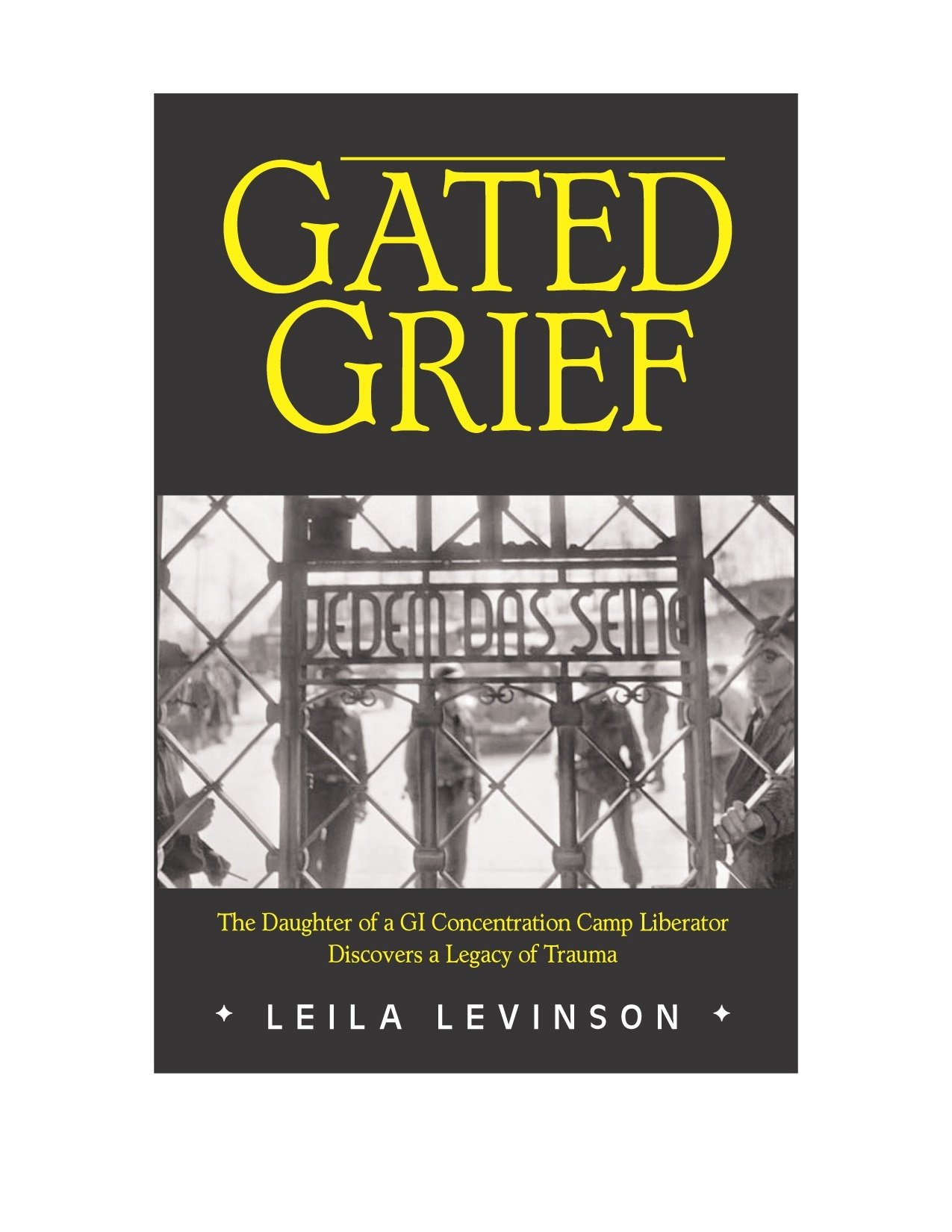
This discovery had personal significance as my father served in World War II as a medical officer and was among the liberators of Nordhausen concentration camp, a fact I learned only after his death. Writing Gated Grief, which portrays the trauma of the liberators, enabled me to understand in a radically new way my own childhood trauma.
My students greatly valued Man’s Search for Meaning by Viktor Frankl. His words guide my life and my work:
“It matters not so much what has happened to us but what we do with what has happened to us.”
"Between stimulus and response there is a space. In that space is our power to choose our response. In our response lies our growth and our freedom"
As well as a writer, I am a ceramic artist and bring my clay and right brain into the room. Clay grounds. The right brain, with its appreciation of metaphor and connection to the body, reveals our truths.
After the death of my father, a WWII Army doctor, I discovered a shoebox box of photos he had taken during his time in the European Theatre.. When I took off the lid, photographs spilled out, hundreds of them. Suddenly, I was looking at blurred images, wavy lines, striped clothing. A foot emerged from the chaos, a leg. Grotesquely frozen faces. My fingers turned a photo over: Nordhausen, Germany, April 1945.
Nordhausen was a concentration camp, liberated by the GIs in April 1945.
My father’s silence about his war years, his lifelong anguish and depression, and a possible connection between his war experience and his silence about why my mother had disappeared from our lives when I was only five years old compelled me to seek out and interview dozens of WWII veterans who were among the liberators of Nazi concentration camps. Veteran after veteran evidenced emotional pain and shock. “My mind froze.” “I was never the same.”
Still traumatized by the unimaginable horrors they came upon, most of the veterans had spoken very little of what they witnessed, not even to their spouses or, as decades passed, to their adult children and grandchildren. I couldn’t talk about it. I couldn’t talk about it because there were not words that could describe…that could convey the horror. Words would almost be sacrilegious.
But my asking them to help me understand my father provided them a reason to open up their locked memories, their recalling long suppressed emotions and experiences enabling some peace for them as well as opening the path to healing for me. One veteran’s words fully explained my father’s silence. “I have struggled to survive every day since.”
Gated Grief won the Military Writers Society of America’s President’s Award and the Story Circle Network’s May Sarton Award as well as being a finalist for the Violet Crown Award.