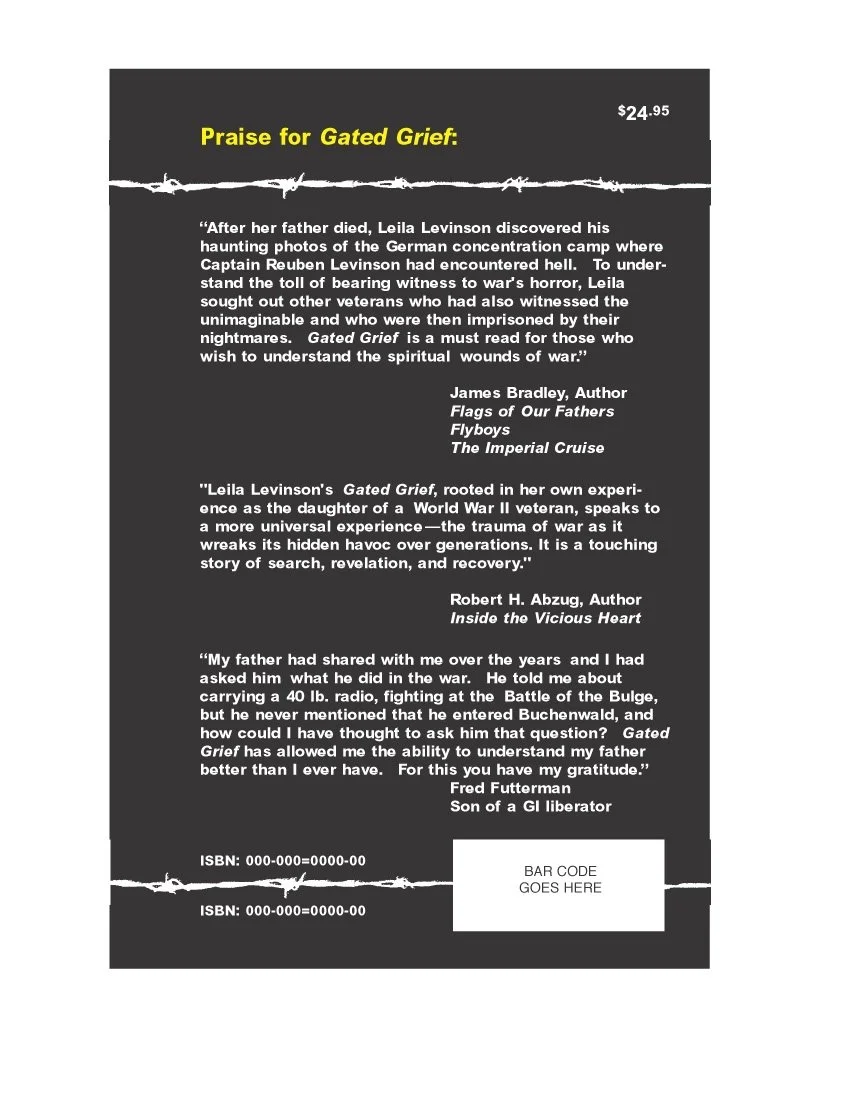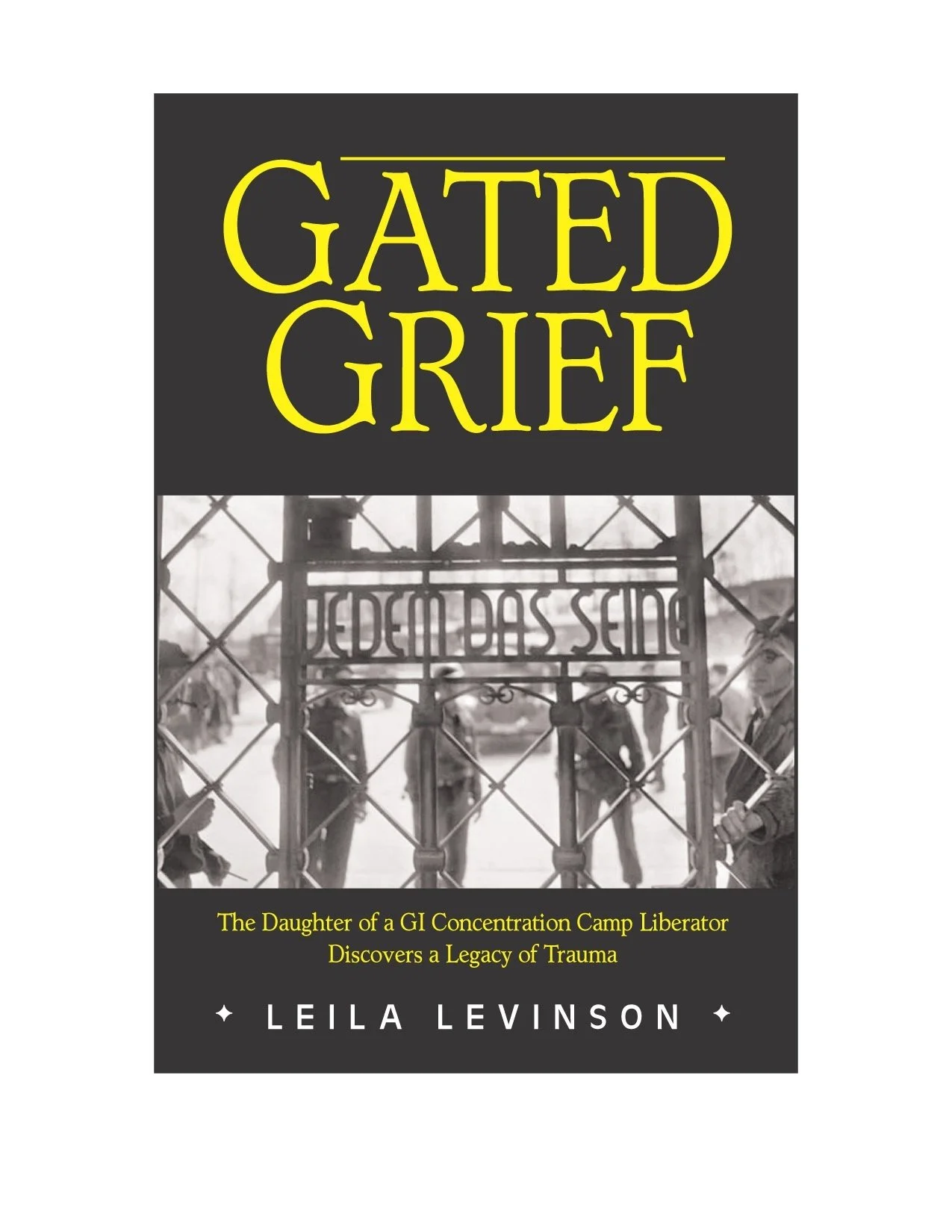
Gated Grief autographed hardcover

$19.00

After the death of my father, a WWII Army doctor, I discovered a shoebox of photos he had taken during his time in the European Theatre. When I took off the lid, hundreds of photographs spilled out.  Suddenly, I was looking at blurred images, wavy lines, striped clothing. A foot emerged from the chaos, a leg.  Grotesquely frozen faces.  My fingers turned a photo over: Nordhausen, Germany, April 1945.

Nordhausen was a concentration camp, liberated by the GIs in April 1945.

My father’s silence about his war years, his lifelong melancholy, and a possible connection between his war experience and his refusal to speak about my mother who had disappeared from our lives when I was five years old, compelled me to seek out and interview dozens of WWII veterans who had also been liberators. Every single one of the veterans evidenced emotional pain and shock.  “My mind froze.”  “I was never the same.”

Still traumatized by the unimaginable horrors they came upon, most of the veterans had spoken very little of what they witnessed, not even to their spouses or, as decades passed, to their adult children and grandchildren. I couldn’t talk about it.  I couldn’t talk about it because there were not words that could describe…that could convey the horror. Words would almost be sacrilegious.

But my asking them to help me understand my father provided a reason to open up their locked memories. Their recalling long suppressed emotions and experiences brought some peace for them as well as opening the path to healing for me. One veteran’s words fully explained my father’s silence. “I have struggled to survive every day since.”

I will be forever grateful to these men.

Gated Grief won the Military Writers Society of America’s President’s Award and the Story Circle Network’s May Sarton Award as well as being a finalist for the Violet Crown Award.

After the death of my father, a WWII Army doctor, I discovered a shoebox of photos he had taken during his time in the European Theatre. When I took off the lid, hundreds of photographs spilled out.  Suddenly, I was looking at blurred images, wavy lines, striped clothing. A foot emerged from the chaos, a leg.  Grotesquely frozen faces.  My fingers turned a photo over: Nordhausen, Germany, April 1945.

Nordhausen was a concentration camp, liberated by the GIs in April 1945.

My father’s silence about his war years, his lifelong melancholy, and a possible connection between his war experience and his refusal to speak about my mother who had disappeared from our lives when I was five years old, compelled me to seek out and interview dozens of WWII veterans who had also been liberators. Every single one of the veterans evidenced emotional pain and shock.  “My mind froze.”  “I was never the same.”

Still traumatized by the unimaginable horrors they came upon, most of the veterans had spoken very little of what they witnessed, not even to their spouses or, as decades passed, to their adult children and grandchildren. I couldn’t talk about it.  I couldn’t talk about it because there were not words that could describe…that could convey the horror. Words would almost be sacrilegious.

But my asking them to help me understand my father provided a reason to open up their locked memories. Their recalling long suppressed emotions and experiences brought some peace for them as well as opening the path to healing for me. One veteran’s words fully explained my father’s silence. “I have struggled to survive every day since.”

I will be forever grateful to these men.

Gated Grief won the Military Writers Society of America’s President’s Award and the Story Circle Network’s May Sarton Award as well as being a finalist for the Violet Crown Award.

“If you want to understand your father's, mother's, or spouse's war experience, if someone in your family has suffered combat trauma, then you need to read this book.  It will bring understanding and open the door to healing your family. Leila, who sought to heal multigenerational traumas, takes on a journey of healing that began when she discovered haunting photographs her father had taken when he helped to liberate a Nazi concentration camp at the end of World War II.   She learned from meeting other veteran liberators that what he witnessed deeply traumatized him and his fellow liberators.  And they brought their trauma home with them where it rippled through their families.  "Even though the subject is difficult, the book ads much to our understanding of trauma and is fast and easily digested, because Leila has confronted and unraveled the horror for us.  She embraces her own calling-- unique, courageous, necessary-- as the witness, chronicler, researcher, and preserver of a huge yet neglected portion of our World War II veteran population that still has much to teach us about trauma."    

  -Dr. Ed Tick, author of War and the Soul

If you want to understand your father's, mother's, or spouse's war experience, if someone in your family has suffered combat trauma, then you need to read this book.  It will bring understanding and open the door to healing your family. Leila, who sought to heal multigenerational traumas, takes on a journey of healing that began when she discovered haunting photographs her father had taken when he helped to liberate a Nazi concentration camp at the end of World War II.   She learned from meeting other veteran liberators that what he witnessed deeply traumatized him and his fellow liberators.  And they brought their trauma home with them where it rippled through their families.  "Even though the subject is difficult, the book ads much to our understanding of trauma and is fast and easily digested, because Leila has confronted and unraveled the horror for us.  She embraces her own calling-- unique, courageous, necessary-- as the witness, chronicler, researcher, and preserver of a huge yet neglected portion of our World War II veteran population that still has much to teach us abut trauma."                               -Dr. Ed Tick, author of War and the Soul